Laser Tattoo and PMU Removal
Although tattoos and permanent makeup are designed to be long-lasting, unwanted pigment can often be significantly lightened and, in some cases, removed to a very high degree with laser treatment.
How easily pigment responds to laser varies from person to person. It can depend on several factors, including:
- the type and colour of pigment or ink used
- how deeply the pigment was implanted
- the technique used by the original artist
- the density and saturation of the pigment
- the area of the face or body being treated
- the age of the tattoo or permanent makeup
- how the pigment responds during the healing process
Tattoo removal usually requires more sessions, and a course of around 6–8 treatments is common.
Permanent makeup often requires fewer sessions, with approximately 3–4 treatments being typical.
However, every case is individual. Some pigment may respond very quickly, while other colours, techniques or heavily saturated areas can require more time and additional sessions.
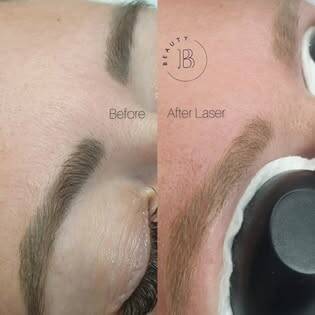
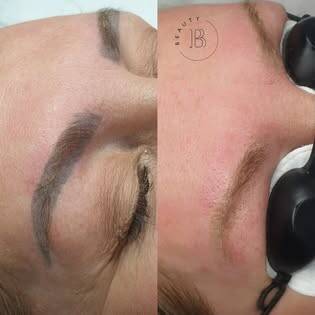
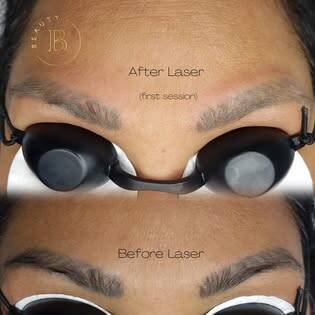
The goal is not always complete removal — in many PMU cases, significant lightening is enough to create space for a new, improved shape or colour.
WHAT TO EXPECT
1. Consultation & Patch Test
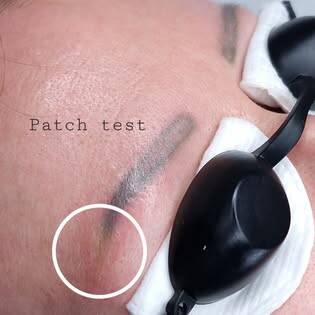
Every laser removal journey starts with a consultation and patch test. This allows me to assess the existing pigment or tattoo, discuss realistic expectations and check how the area responds before proceeding with a full treatment.
2. During the Treatment & Results
During the session, the laser is passed over the treated area in a controlled and precise way. Treatment time depends on the size and location of the tattoo or permanent makeup.
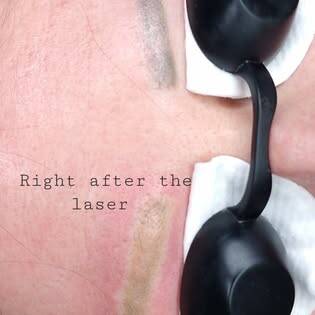
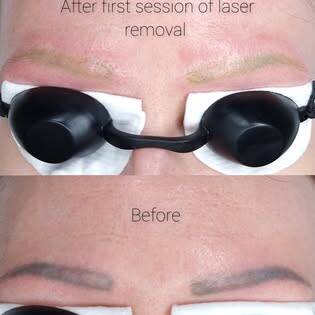
Results can vary from session to session. In some cases, significant lightening may be visible after the first treatment, while in others the initial change may be more subtle. This does not mean the laser is not working. The laser session is only the beginning of the fading process, and the pigment can continue to lighten gradually over the following weeks.
3. Immediately After Treatment
Immediately after treatment, some redness, warmth or mild sensitivity can be expected. With appropriate settings, broken skin, blistering, heavy scabbing or scarring are not expected outcomes.
This is one of the reasons a patch test is so important — it helps me assess how your skin and pigment respond and select suitable treatment settings before proceeding with a full session.
4. Healing & Fading
The skin needs time to recover after each session. Pigment will continue to lighten gradually over several weeks, so the result should not be judged immediately after treatment.
5. Future Sessions
At the beginning of the laser removal journey, I usually recommend spacing the first treatments approximately 6 weeks apart.
As the treatment progresses, the intervals become longer:
- Sessions 1–3: approximately 6 weeks apart
- Sessions 4–6: approximately 8 weeks apart
- Further sessions, if required: approximately 10 weeks apart
Allowing enough time between treatments gives the skin time to recover and allows the fading process to continue before the next session.
READY TO START YOUR REMOVAL JOURNEY?
Every case is different, which is why treatment always begins with a consultation and patch test. This allows me to assess the pigment, discuss realistic expectations and plan the safest approach for your skin.
BOOK CONSULTATION & PATCH TEST